Anthropic vs OpenAI: Pentagon AI Deal Sparks Public Rift

The AI rivalry between Dario Amodei and Sam Altman just escalated publicly โ€” and the dispute centers on the growing role of artificial intelligence in U.S. defense.

According to a 1,600-word internal memo obtained by The Information, Amodei sharply criticized OpenAI and its recent Pentagon partnership, describing the situation as โ€œmaybe 20% real and 80% safety theater.โ€ The memo pulls back the curtain on tensions between the two leading AI labs and highlights how competition, politics, and national security are becoming increasingly intertwined in the AI race.


What Triggered the Dispute

The controversy began when the United States Department of Defense reportedly labeled Anthropic a potential โ€œsupply chain risk.โ€

Shortly after, OpenAI moved forward with its own defense-related agreement with the Pentagon under similar terms.

Amodeiโ€™s memo suggests Anthropic believes the process was inconsistent and politically influenced. He also pushed back against the narrative that Anthropic failed to cooperate with defense officials.


Direct Criticism of OpenAI Leadership

Amodei didnโ€™t stop at policy disagreements. The memo included unusually direct criticism of OpenAI leadership.

He accused Sam Altman of โ€œgaslightingโ€ competitors and pointed to a reported $25 million political donation by Greg Brockman connected to former president Donald Trump, contrasting it with Anthropicโ€™s refusal to offer what he described as โ€œdictator-style praise.โ€

According to Amodei, OpenAI has repeatedly tried to portray Anthropic as:

  • Uncooperative
  • Difficult to work with
  • Less flexible in negotiations

He characterized this messaging as part of a broader pattern he says he has observed from Altman over time.


A Softer Tone Toward the Pentagon

Interestingly, just days after the memo, Amodei publicly softened his stance toward the Pentagon.

He acknowledged that Anthropic and the Department of Defense โ€œhave much more in common than we have differences.โ€

This suggests the dispute may be less about whether AI should support national security โ€” and more about how those partnerships are structured and communicated.


Why This Matters

The conflict reveals several deeper trends shaping the AI industry:

1. Defense AI is becoming a strategic battleground
Major AI labs increasingly see government and defense contracts as critical to scale and influence.

2. Competition between frontier labs is intensifying
What was once a technical rivalry is now becoming personal and political.

3. Trust and governance remain unresolved issues
As governments integrate AI into national security, questions about safety, transparency, and corporate influence will only grow.


The Bigger Picture

The public tone of Amodeiโ€™s memo suggests long-standing tensions dating back to his departure from OpenAI in 2020, when he went on to co-found Anthropic.

Between this memo, earlier disagreements over AI safety frameworks, and high-profile marketing moves by major labs, the frontier AI rivalry is no longer just technical โ€” itโ€™s becoming geopolitical.

And with the Pentagon now entering the picture, the stakes for AI leadership have never been higher.
https://www.theinformation.com/articles/read-anthropic-ceos-memo-attacking-openais-mendacious-pentagon-announcement

๐— ๐—ถ๐—ฐ๐—ฟ๐—ผ๐˜€๐—ผ๐—ณ๐˜ just handed ๐—ฃ๐—ผ๐˜„๐—ฒ๐—ฟ ๐—ฃ๐—ฎ๐—ด๐—ฒ๐˜€ to ๐—”๐—ป๐˜๐—ต๐—ฟ๐—ผ๐—ฝ๐—ถ๐—ฐ’๐˜€ ๐—–๐—น๐—ฎ๐˜‚๐—ฑ๐—ฒ ๐—–๐—ผ๐—ฑ๐—ฒ.

Last week, Microsoft released the Power Pages plugin for Claude Code and GitHub Copilot CLI โ€” now in public preview. This isn’t a chatbot that helps you write code snippets. This is a full lifecycle agentic plugin that scaffolds, deploys, and activates Power Pages sites from natural language.
You describe what you want. Claude Code builds the scaffolding, connects to Dataverse, sets up the data model, configures web roles and permissions, integrates the Web API, and deploys a live site.
No JavaScript. No HTML. No pro-code.

๐—ช๐—›๐—”๐—ง ๐—”๐—–๐—ง๐—จ๐—”๐—Ÿ๐—Ÿ๐—ฌ ๐—–๐—›๐—”๐—ก๐—š๐—˜๐——
The plugin provides nine conversational skills covering the full Power Pages SPA lifecycle. You run /create-site, describe your portal, and specialized AI architects handle the rest. A Data Model Architect queries your Dataverse environment to reuse existing tables or create new ones. A Permissions Architect proposes table permissions and site settings.
Microsoft MVP Hen Rasheed demonstrated it live: a fully functional customer portal โ€” ticket submission, tracking, knowledge base, mobile responsive, deployed and activated โ€” built in just over an hour without writing a single line of code. Work that would have taken developers days to weeks.

๐—ช๐—›๐—ฌ ๐—ง๐—›๐—œ๐—ฆ ๐— ๐—”๐—ง๐—ง๐—˜๐—ฅ๐—ฆ
Power Pages has always been the tool most Power Platform consultants avoided โ€” including myself. Microsoft called it low code, but getting anything production-worthy required deep JavaScript, HTML, and Liquid templating. That wall between citizen developers and functional external portals was real.
This plugin takes that wall down.
But here’s what enterprises need to understand: the AI is only as good as the data estate it connects to. The Data Model Architect queries your Dataverse environment and reuses existing tables โ€” meaning your table structure, governance, and naming conventions matter more now, not less. Clean architecture amplifies the AI. Messy architecture gets amplified too.

๐—ง๐—›๐—˜ ๐—•๐—œ๐—š๐—š๐—˜๐—ฅ ๐—ฆ๐—œ๐—š๐—ก๐—”๐—Ÿ
Microsoft chose Anthropic’s Claude Code for this โ€” alongside their own GitHub Copilot CLI. That’s not an accident. It’s Microsoft acknowledging Anthropic’s models are best-in-class for agentic coding, and choosing to leverage that instead of competing against it.
This is the multi-model strategy in action. Same pattern as Copilot Studio adding Claude, then Grok. Microsoft is becoming the orchestration layer โ€” now extending that philosophy into the developer toolchain itself.
Still in preview. Don’t use it in production yet. But the direction is unmistakable.
What Power Platform use cases are you building โ€” and is your data estate ready for AI to build on top of it?

๐Ÿ“Ž Sources and references:
๐Ÿ”— Microsoft Power Platform Blog: “Build Power Pages sites with AI using agentic coding tools (preview)” https://www.microsoft.com/en-us/power-platform/blog/power-pages/build-power-pages-sites-with-ai-using-agentic-coding-tools-preview/
๐Ÿ”— Microsoft Learn: “Get started with the Power Pages plugin for GitHub Copilot CLI and Claude Code (preview)” https://learn.microsoft.com/en-us/power-pages/configure/create-code-site-using-claude-code
๐Ÿ”— GitHub: microsoft/power-platform-skills โ€” Plugin Marketplace Repository https://github.com/microsoft/power-platform-skills
๐Ÿ”— Microsoft Power Platform Blog: “What’s new in Power Platform: February 2026 feature update” https://www.microsoft.com/en-us/power-platform/blog/power-apps/whats-new-in-power-platform-february-2026-feature-update/
๐Ÿ”— Hen Rasheed (Microsoft MVP, Powercademy) โ€” Live demonstration building a full customer portal with Claude Code Power Pages plugin in approximately 1 hour with zero code

U.S. Supreme Court Declines AI Copyright Case โ€” Human Authorship Stands (For Now)

The Supreme Court of the United States has declined to hear the most prominent case yet on whether AI-generated artwork can be copyrighted. By refusing review, the Court let lower court rulings stand โ€” reinforcing a foundational principle: only humans can be authors under U.S. copyright law.

This decision leaves one of the defining intellectual property questions of the AI era unresolved at the highest level โ€” but clarified, for now, at the lower courts.


The Case: Stephen Thaler and DABUS

https://imagination-engines.com/images/thaler_small.JPG
https://www.researchgate.net/publication/347265468/figure/fig1/AS%3A972438087147520%401608858715298/The-two-inventions-designed-by-the-AI-system-DABUS-and-included-in-the.png
https://ddg-assets.b-cdn.net/blog/abstract-art-and-ai/1.jpg

4

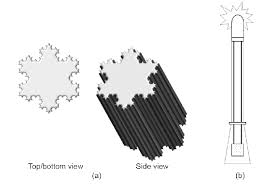
The dispute centers on computer scientist Stephen Thaler, who developed an AI system called DABUS (Device for the Autonomous Bootstrapping of Unified Sentience).

In 2018, Thaler sought to register copyright for artwork generated entirely by DABUS. Importantly, he listed the AI โ€” not himself โ€” as the author.

The United States Copyright Office denied the application, stating that copyright protection requires human authorship.

A federal district court agreed in 2023, calling human authorship a โ€œbedrock requirementโ€ of copyright law. The United States Court of Appeals for the District of Columbia Circuit upheld that decision.

Even the Trump-era Department of Justice supported the Copyright Officeโ€™s position, arguing that U.S. copyright statutes were written with human creators in mind โ€” not autonomous machines.

With the Supreme Court declining review, that interpretation now stands.


What the Appeals Court Subtly Suggested

Interestingly, the appeals court noted that Thaler could have claimed authorship himself rather than naming the AI as the sole creator.

That nuance matters.

The ruling does not close the door on AI-assisted works. Instead, it draws a line:

  • โŒ Fully autonomous AI = no copyright
  • โœ… Human-directed or AI-assisted creation = potentially copyrightable

The distinction will shape future filings, litigation, and creative strategy.


Why This Matters

This case is striking for two reasons:

1๏ธโƒฃ AI Was Creating Art Years Ago

DABUS generated artwork well before generative AI tools became mainstream. What once seemed experimental is now routine across writing, design, film, music, and software development.

2๏ธโƒฃ The Creative Economy Is Already AI-Infused

AI-generated and AI-assisted content is pouring into:

  • Publishing
  • Advertising
  • Film and television
  • Gaming
  • Marketing
  • Social media

The ruling feels, in some ways, awkward against todayโ€™s reality. AI systems are deeply embedded in creative workflows โ€” yet the legal framework remains rooted in a strictly human conception of authorship.


What Happens Next?

This issue is far from settled.

The next wave of cases will likely involve:

  • Major studios using AI in production pipelines
  • Individual creators leveraging AI tools
  • Disputes over how much human input is โ€œenoughโ€
  • International inconsistencies in copyright treatment

Unlike Thalerโ€™s case โ€” where the AI was declared the sole author โ€” future litigation will focus on hybrid creativity.

And those cases may carry significantly larger financial stakes.


The Bigger Question

The core tension remains:

If AI can generate creative works indistinguishable from human art, but the law only recognizes humans as authors โ€” how should ownership be structured?

For now, U.S. copyright law remains human-centric.

But as AI becomes more autonomous, more embedded, and more commercially significant, this question will almost certainly return to the Supreme Court โ€” backed by far bigger players.

The defining intellectual property battle of the AI era has only begun.

https://www.reuters.com/legal/government/us-supreme-court-declines-hear-dispute-over-copyrights-ai-generated-material-2026-03-02

OpenAI, Anthropic, and the Pentagon: The AI Power Shift That Triggered a Consumer Backlash

OpenAI has signed a deal with the Pentagon only hours after President Trump ordered federal agencies to cut ties with Anthropic โ€” a company that had refused to remove safeguards against mass surveillance and autonomous weapons.

OpenAI says its own contract contains similar ethical red lines, but the timing has sparked intense scrutiny โ€” and an immediate reaction from consumers.


What Happened

Anthropic was the first major AI lab allowed on the Pentagonโ€™s classified networks. But negotiations broke down after the company insisted on explicit restrictions preventing:

  • mass domestic surveillance
  • fully autonomous weapons
  • removal of safety checks

The Pentagon reportedly declined to formally guarantee those limits, arguing it needed unrestricted lawful access to AI capabilities.

Following the dispute, President Trump ordered agencies to stop using Anthropic technology, while Defense Secretary Pete Hegseth labeled the company a โ€œsupply-chain riskโ€ โ€” a designation normally associated with adversarial actors.


OpenAI Steps In

Within hours, OpenAI announced a new agreement with the Pentagon to deploy its models in classified environments.

CEO Sam Altman stated that the contract includes key red lines:

  • no mass domestic surveillance
  • no autonomous lethal weapons
  • human responsibility for use of force

Altman said these principles are reflected in both policy and contract terms.

At the same time, he acknowledged the situation looked โ€œrushedโ€ and publicly called the Anthropic ban a โ€œvery bad decision,โ€ highlighting the awkward optics of replacing a competitor immediately after its removal.


The Gray Area: Do the Safeguards Actually Match?

This is where the real debate begins.

Reports suggest Anthropic pushed for stronger contractual language explicitly restricting large-scale data collection and surveillance, while OpenAIโ€™s agreement may rely more heavily on existing law and broader policy frameworks.

In other words:

  • Anthropic wanted stricter guarantees written directly into contracts.
  • OpenAI appears to be relying more on layered safeguards and legal constraints.

Whether those differences are meaningful or mostly semantic is now the central question being watched by analysts and AI ethicists.


Consumer Reaction: Fast and Emotional

The public response was immediate.

  • Claude reportedly surged to the top of Appleโ€™s App Store productivity rankings.
  • Social media saw a wave of โ€œCancel ChatGPTโ€ posts and users sharing subscription cancellations.

Online discussions framed the moment as a values decision โ€” with some users supporting Anthropicโ€™s refusal to compromise and others arguing that national-security partnerships are inevitable for frontier AI labs.


The Bigger Strategic Picture

This moment reveals a deeper shift happening in the AI industry:

1๏ธโƒฃ Government relationships are becoming strategic assets

Winning defense contracts may matter more long-term than short-term consumer sentiment.

2๏ธโƒฃ Safety language is becoming competitive positioning

AI companies are now competing not only on performance, but on how they define ethical boundaries.

3๏ธโƒฃ Consumer trust can swing fast

The rapid movement between apps shows how quickly narrative and perception can influence market dynamics โ€” even when underlying policies are complex.


Why This Matters

The key question isnโ€™t just who got the Pentagon contract.

Itโ€™s whether OpenAIโ€™s safeguards truly mirror Anthropicโ€™s โ€” or simply look similar on paper.

If they are equivalent, the backlash may fade.
If they arenโ€™t, this moment could reshape how consumers evaluate AI companies and their alignment with government power.

Either way, the AI landscape is entering a new phase where:

  • policy decisions move markets,
  • ethics become product strategy,
  • and public perception can shift overnight.

https://openai.com/index/our-agreement-with-the-department-of-war

Google Launches Nano Banana 2 โ€” High-End Image Generation at Flash-Level Cost

Google has officially released Nano Banana 2, the upgraded version of its viral image generation model โ€” delivering major improvements in quality, consistency, speed, and pricing while taking the top spot on text-to-image leaderboards.

Whatโ€™s New

Nano Banana 2 now ranks #1 for text-to-image generation on leading benchmarks such as Artificial Analysis and LM Arena, outperforming both Nano Banana Pro and OpenAIโ€™s GPT Image 1.5. The model also secured a strong position for image editing tasks, ranking third overall.

Key upgrades include:

  • 4K output resolution across multiple aspect ratios
  • Improved scene consistency, supporting up to five characters and fourteen objects while maintaining visual coherence
  • Significantly better text rendering, a historically difficult challenge for image models
  • Faster generation speeds approaching Gemini Flash-level performance

Pricing and Accessibility

One of the most notable changes is cost efficiency. At roughly $0.07 per image, Nano Banana 2 comes in at nearly half the price of competing premium models while delivering top-tier performance.

Google has already integrated the model as the default image generator across Gemini and its broader tool ecosystem, while Nano Banana Pro remains available for paid users who need advanced options.

Why It Matters

The original Nano Banana models pushed image generation forward when they launched last August, but Nano Banana 2 signals a bigger shift in the market.

Historically, users had to choose between:

  • High quality but expensive models
  • Faster, cheaper models with lower fidelity

Nano Banana 2 begins to blur that line. By combining state-of-the-art image quality with flash-level speed and aggressive pricing, Google is moving toward a future where quality and affordability are no longer mutually exclusive.

If this trajectory continues, the competitive landscape for AI image generation could shift from pure capability races toward efficiency, ecosystem integration, and scale โ€” areas where large platform players hold a strong advantage.

https://blog.google/innovation-and-ai/technology/ai/nano-banana-2