4
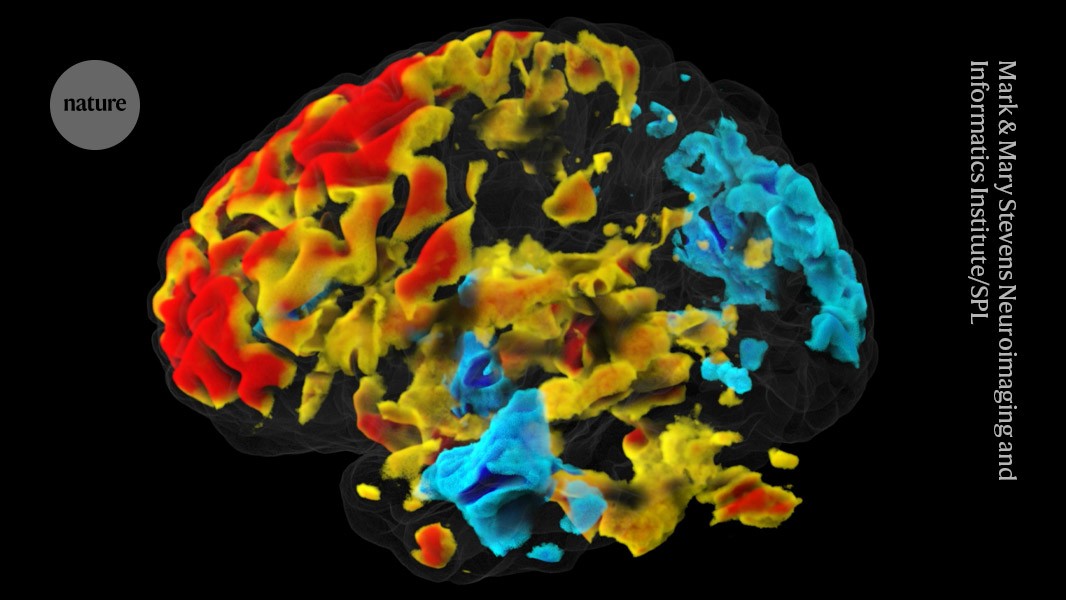
Meta has taken a bold step into the future of neuroscience with the release of TRIBE v2—an open-source AI model that can simulate human brain activity across vision, hearing, and language. What makes this breakthrough remarkable isn’t just its scale, but its performance: in some cases, its synthetic predictions outperform actual fMRI brain scans.
This signals a potential turning point where software begins to rival—and even replace—traditional brain imaging experiments.
🚀 What TRIBE v2 Actually Does
TRIBE v2 is designed to model how the brain responds to different stimuli—like images, sounds, and text—without needing a human subject inside an MRI machine.
Here’s what sets it apart:
- Massive scale-up in data and scope
- Trained on 1,000+ hours of brain recordings
- Expanded from 1,000 → 70,000 brain regions
- Built using data from 700+ individuals (vs. just 4 in v1)
- Cross-modal intelligence
- Simulates neural responses across:
- 👁️ Vision
- 👂 Hearing
- 🗣️ Language
- Simulates neural responses across:
- High-fidelity predictions
- Its outputs align with population-level brain activity
- In some cases, cleaner than real fMRI scans, which are often noisy due to:
- Heartbeats
- Movement
- Scanner artifacts
🧪 A Surprising Result: AI vs. Real Brain Scans
One of the most striking findings is that TRIBE v2 can outperform actual fMRI data in predicting brain activity patterns.
That sounds counterintuitive—until you consider:
- fMRI scans are inherently noisy and indirect
- AI models can produce clean, idealized signals
- Aggregated training across hundreds of people removes individual variability
In effect, TRIBE v2 creates a “denoised, generalized brain”—something neuroscientists have never had access to before.
🧠 Reproducing Decades of Neuroscience—Without Scans
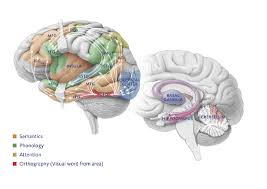
Perhaps the most impressive capability: TRIBE v2 can rediscover known brain mappings purely in software.
Without running new scans, it correctly identified:
- Face-processing regions
- Speech-related areas
- Text and language centers
This means the model has internalized fundamental principles of brain organization—a milestone for computational neuroscience.
🔓 Fully Open-Source (and That’s a Big Deal)
Meta didn’t just publish a paper—they released:
- ✅ Model weights
- ✅ Source code
- ✅ Live demo environment
This dramatically lowers the barrier to entry. Researchers no longer need:
- Access to expensive MRI machines
- Complex experimental setups
- Large subject pools
Instead, they can run virtual brain experiments on demand.
⚡ Why This Matters (The AlphaFold Moment?)
This could be neuroscience’s version of AlphaFold.
Before AlphaFold:
- Protein research required years of lab work
After AlphaFold:
- Structures can be predicted in minutes
TRIBE v2 could trigger a similar shift:
| Traditional Neuroscience | With TRIBE v2 |
|---|---|
| Expensive MRI scans | Virtual simulations |
| Weeks/months per study | Seconds/minutes |
| Limited sample sizes | Scalable datasets |
| High noise levels | Clean predictions |
⚠️ Important Caveats
Despite the excitement, this isn’t a full replacement for real neuroscience (yet):
- It models average brain behavior, not individual differences
- It depends heavily on training data quality
- Real-world validation is still essential
Think of it as a powerful accelerator, not a total substitute.
🧭 The Bigger Picture
TRIBE v2 hints at a future where:
- Brain research becomes compute-driven instead of hardware-limited
- Hypotheses can be tested before involving human subjects
- AI helps uncover patterns we might never detect manually
For someone like you—working in Azure + AI systems design—this is also a signal:
👉 The next wave of AI isn’t just language or vision—it’s biological system simulation at scale.
💡 Bottom Line
TRIBE v2 is more than a model—it’s a shift in how we approach understanding the brain.
If it continues to evolve, we may soon reach a point where:
- Running a neuroscience experiment
- Feels more like running a cloud workload
And that’s a profound change.

 Add to favorites
