
A resource tag consists of a name and a value. You can assign one or more tags to each Azure resource.
| Name | Value |
|---|---|
| AppName | The name of the application that the resource is part of. |
| CostCenter | The internal cost center code. |
| Owner | The name of the business owner who’s responsible for the resource. |
| Environment | An environment name, such as “Prod,” “Dev,” or “Test.” |
| Impact | How important the resource is to business operations, such as “Mission-critical,” “High-impact,” or “Low-impact.” |
Here’s an example that shows these tags as they’re applied to a virtual machine during provisioning.
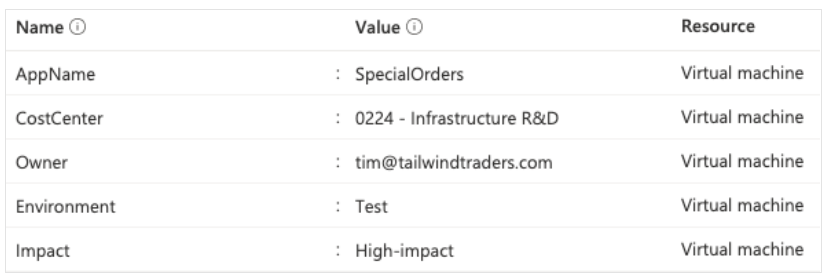
You can run queries, for example, from PowerShell or the Azure CLI, to list all resources that contain these tags.
Azure Policy is a service in Azure that enables you to create, assign, and manage policies that control or audit your resources. These policies enforce different rules and effects over your resource configurations so that those configurations stay compliant with corporate standards.
Read more about it here;
Reference;

 Add to favorites
